
The Indian business and energy sectors face a critical juncture as the Supreme Court (SC) raises alarms over pre-election financial incentives.
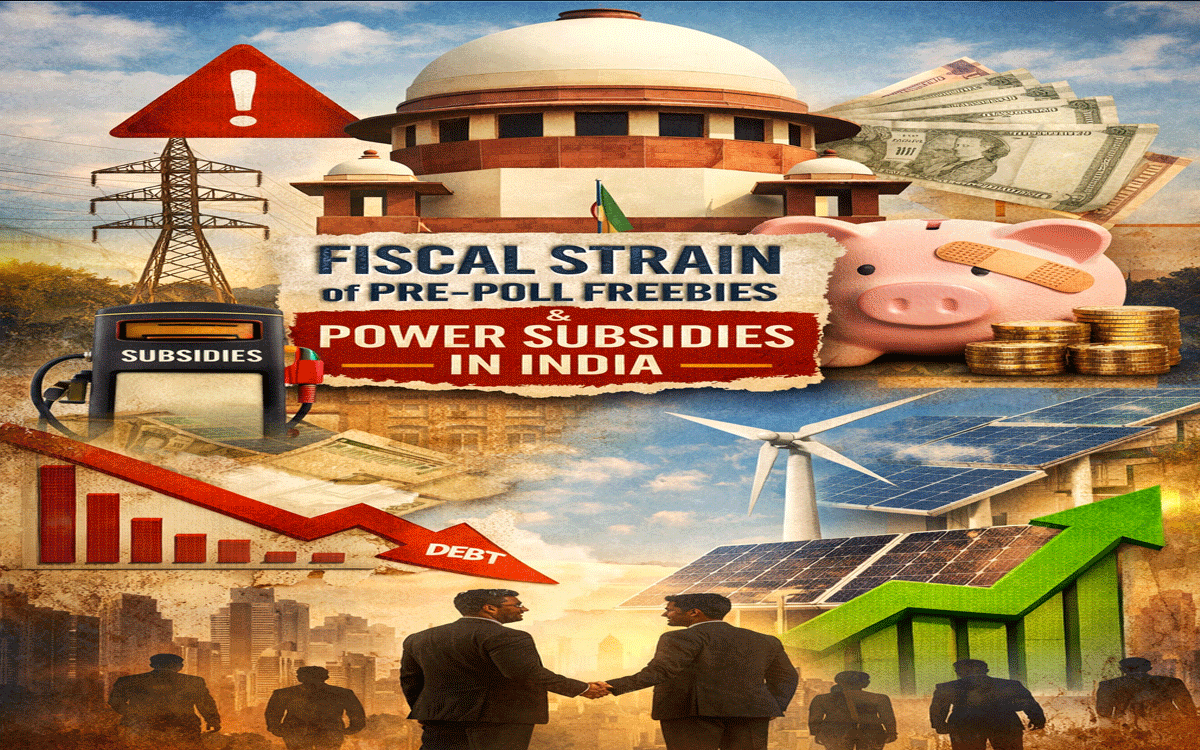
These “freebies” and government subsidies, while politically appealing, may strain public finances and create long-term risks for the power sector. Investors and companies must reassess strategic priorities in light of regulatory scrutiny.
Below we Net 4 India News | Indian News and Updat will discuss the latest developments regarding the Supreme Court’s warning about the fiscal burden resulting from pre-election political promises, as well as its impact on electricity subsidies and business opportunities in the energy sector.
SC Raises Red Flag on Pre-Poll Freebies
The Supreme Court has highlighted the fiscal risks of election-time promises, emphasizing that indiscriminate freebies can destabilize budgets. Businesses should note that such financial stress can affect liquidity and investor confidence.
Political incentives often translate into short-term consumer benefits, but long-term economic stability may suffer. Companies in energy and utilities sectors face potential delays in project approvals or tariff adjustments.
Investors now watch policy announcements more closely. Decisions impacting subsidies or public spending can shift market dynamics, affecting stock valuations and strategic planning in critical sectors.
Fiscal Strain Threatens Power Sector Stability
Subsidies for electricity and fuel are under scrutiny, as the SC questions whether states can sustain these financial commitments. Persistent deficits may force states to borrow more, raising interest costs.
Energy companies relying on government-backed payments could face delayed receivables. This can disrupt cash flow and hinder expansions or modernization plans. Financial prudence is becoming a priority for corporate decision-makers.
For the business community, these warnings suggest a shift toward sustainable, market-driven energy pricing. Firms that proactively manage subsidy dependencies gain competitive advantage and resilience.
Political Promises vs Economic Realities
Pre-poll giveaways are attractive for voters but can conflict with economic fundamentals. Businesses must balance optimism around rising demand with the caution warranted by fiscal uncertainty.
Corporate strategists now integrate policy risk assessments into investment decisions. Infrastructure and power projects are particularly vulnerable to abrupt policy shifts influenced by political cycles.
Analysts predict a more cautious approach to subsidies and incentives. Transparent financial planning and clear regulatory frameworks are essential for sustaining investor trust and market stability.
Read Also: Smart Fashion 2026, How Technology Is Transforming Everyday Clothing
Opportunities Amid Regulatory Scrutiny

While scrutiny may seem restrictive, it opens avenues for innovative business models. Renewable energy projects, private investment in power generation, and efficiency-driven initiatives are less subsidy-dependent.
Companies can explore strategic partnerships to share risk and leverage government support efficiently. Public-private collaborations are positioned to benefit from stricter compliance and enhanced accountability.
The market may reward firms that prioritize sustainability and fiscal responsibility. Forward-thinking businesses can capitalize on the shift from politically driven subsidies to market-aligned growth opportunities.
Conclusion: Strategic Implications for Businesses
The SC’s caution signals a critical need for fiscal discipline in India’s power and energy sectors. Companies must adapt to evolving regulatory landscapes and anticipate policy-driven financial pressures.
Business leaders should evaluate exposure to subsidies and freebie-driven consumption. Risk mitigation strategies, including diversification and capital efficiency, will define resilience in a market sensitive to political and economic fluctuations.
Ultimately, innovation, transparency, and fiscal prudence emerge as core drivers for sustainable growth. Firms that align business strategy with economic realities are likely to outperform in India’s transforming energy and corporate environment.
For more detailed insights on India’s energy subsidies and fiscal policies, visit Net 4 India News | Indian News and Updat.
Image Source:
- First Image from: net4indianews.com
- Second Image from: cryptorank.io